How to Choose a Dentist You Can Trust: A Complete Guide

How to Choose the Right Dentist: What to Look For and What to Avoid
Choosing a dentist is about more than finding an office close to home or one that accepts your insurance. You're choosing a healthcare provider who may help you manage your oral health for years to come. Their recommendations can affect your comfort, finances, and long-term dental health, so it makes sense to take the time to find someone you trust.
Maybe you've had an experience that left you questioning a treatment recommendation. Perhaps you've felt rushed through appointments, struggled to get clear answers, or wondered whether a procedure was truly necessary. These concerns deserve thoughtful consideration. You should be able to understand what's happening with your teeth, why a dentist recommends a particular treatment, and what alternatives may be available.
A trustworthy dentist doesn't expect you to accept every recommendation without question. Instead, they explain their findings, discuss the benefits and limitations of different options, and help you make informed decisions without unnecessary pressure.
At Division Street Dental in Mount Veron, Dr. Heron's approach is grounded in these principles. This guide explains how to research a dentist's qualifications, recognize patient-first care, evaluate treatment recommendations, and decide whether a practice is the right fit for you. You can also explore the practice's guiding principles to learn more about its approach to care.
Quick Takeaways
- Verify a dentist's license, professional background, and relevant training before booking.
- Look for clear explanations, individualized treatment recommendations, and time to ask questions.
- Treat online reviews as one source of information, not the final word on a dentist's quality.
- Ask about alternatives, risks, benefits, and the consequences of delaying treatment.
- Consider a second opinion when you have questions about a significant or irreversible procedure.
- Use your first appointment to evaluate communication, comfort, and whether the practice respects your decisions.
How to Research a Dentist's Qualifications
A dentist's qualifications are an important starting point, but knowing how to interpret them matters just as much as knowing where to look. A provider's website can introduce you to their background, while official licensing records and professional organizations can help you verify specific details.
Verify Their Dental License
Dentists must hold an active license in the state where they practice. In Washington, you can use the Washington State Department of Health's healthcare provider credential search to look up a dentist's license and review available disciplinary information.
An active license establishes that a provider meets the state's licensing requirements. It doesn't tell you everything about their clinical judgment or communication style, but it gives you a useful starting point.
Understand the Difference Between General Dentistry and Specialty Training
General dentists provide a broad range of preventive, restorative, and other dental services. Some pursue additional education and experience in specific areas, while others complete advanced residency training to qualify for a recognized dental specialty.
These distinctions matter when you're evaluating a dentist for a particular procedure. A provider may have substantial experience with a treatment without being a specialist in that field. Likewise, a dentist's use of terms such as "advanced training" or "focused on" doesn't automatically indicate a formal specialty designation.
Neither general practice nor specialty training is inherently the better choice for every patient. What matters is whether the dentist's qualifications and experience are appropriate for your needs and whether they recognize when a case would benefit from referral to another provider.
Look for Continuing Education
Dental materials, techniques, and clinical recommendations evolve over time. Continuing education helps dentists maintain and expand their knowledge beyond dental school.
When researching a practice, look for information about professional development and training relevant to the care you're considering. You can also ask about a dentist's experience with a specific procedure during your consultation.
Continuing education is one useful indicator of professional engagement, but it should be considered alongside clinical experience, communication, and the dentist's approach to treatment planning.
What Does Patient-First Dental Care Look Like?

A welcoming office and friendly staff can make an appointment more pleasant, but the quality of a patient-dentist relationship goes deeper than first impressions. One of the most important things to evaluate is how the dentist explains your oral health and involves you in decisions.
For example, consider the difference between hearing, "You need a crown," and receiving a fuller explanation of why a crown is being recommended, what it is intended to protect, and what other options may be appropriate.
A patient-first dentist makes room for that conversation. You should understand the reasoning behind a recommendation rather than feeling that you have to agree simply because a professional said so.
Signs of a Trustworthy Dental Practice
During your research and appointments, look for these behaviors:
- A thorough health history: The team asks about your medical conditions, medications, previous dental treatment, and concerns that may affect your care.
- Clear explanations: The dentist explains examination findings in plain language and helps you understand relevant X-rays or images.
- Individualized recommendations: Treatment is based on your oral health, circumstances, and goals rather than a one-size-fits-all plan.
- Honest discussions about alternatives: You can ask about the benefits, risks, limitations, and costs of different approaches.
- Respect for your questions: The team gives you time to understand your options without making you feel difficult or inconvenient.
- Appropriate prioritization: The dentist distinguishes between conditions that need prompt attention, issues that can be monitored, and elective treatments you may choose to pursue.
- Willingness to refer: When a case falls outside the dentist's expertise or available resources, they discuss referral options when appropriate.
A practice doesn't have to be perfect in every interaction to provide good care. What matters is whether the team consistently communicates openly, takes your concerns seriously, and helps you understand your options.
Red Flags to Watch for When Choosing a Dentist
No single interaction necessarily tells you everything about a practice. However, certain patterns may signal that you need more information, a second opinion, or a different provider.
Pressure to Commit Before You Understand the Treatment
Some dental conditions require prompt attention, and a dentist should explain when delaying care could put your health at risk. But you should still have an opportunity to understand the diagnosis, the proposed treatment, and the reason for the recommended timeline.
Be cautious if you feel pressured to agree to extensive treatment before your questions have been answered or before you understand the alternatives. For nonurgent procedures, it's reasonable to ask for time to consider your options or seek another opinion.
Vague or Incomplete Explanations
You shouldn't have to leave an appointment wondering what condition you have or why a procedure was recommended.
If an explanation doesn't make sense, ask the dentist to walk you through the findings again. You can ask to see relevant X-rays or photographs and request clarification about what the dentist has observed.
If your questions are repeatedly dismissed or you cannot get a clear explanation of the proposed treatment, consider seeking another opinion.
Treatment Plans You Don't Understand
A comprehensive examination may uncover several issues that need attention, so a long treatment plan isn't automatically a sign of overtreatment. However, the dentist should help you understand each recommendation and how the pieces fit together.
Ask which conditions need attention first, which can be monitored, and whether any procedures are optional. You should also understand how the dentist arrived at the diagnosis and what could happen if treatment is delayed.
The goal isn't to assume that extensive treatment is unnecessary. It's to make sure the proposed care has a clear clinical rationale.
Unwanted Pressure to Pursue Cosmetic Treatment
Cosmetic dentistry can help patients address concerns about the appearance of their teeth, but elective treatment should reflect your goals.
A dentist may point out an aesthetic concern or explain a potential benefit of treatment. That conversation should not leave you feeling ashamed of a healthy smile or pressured to change something you were comfortable with before the appointment.
If cosmetic treatment interests you, ask about the available options, their limitations, the amount of tooth structure that may need to be altered, and how long the results may last. You should be able to decide whether the potential benefits align with your priorities.
Reluctance to Discuss Alternatives or Second Opinions
There may be a clear clinical reason to recommend one treatment over another. Still, a dentist should be able to explain that reasoning and discuss reasonable alternatives, including monitoring when appropriate.
If you are considering a major procedure and feel uncertain, asking for a second opinion is a reasonable step. A dentist's willingness to explain the treatment and support an informed decision can tell you a great deal about the relationship you're building.
Questions to Ask Before Choosing a Dentist
You don't need to interview a dentist as though you're conducting a formal investigation. A few thoughtful questions can help you understand how the practice approaches care and whether it fits your needs.
Consider asking:
- What experience do you have with the treatment I'm considering? Ask about relevant training, how frequently the dentist performs the procedure, and whether your case has any complicating factors.
- How do you decide which treatments are necessary? The answer can help you understand how the dentist approaches diagnosis, risk, and long-term oral health.
- What are my alternatives? Ask about the benefits and limitations of other reasonable approaches, including monitoring or delaying treatment when clinically appropriate.
- What could happen if I wait? Understanding the risks of delaying care can help you prioritize treatment without feeling rushed.
- How do you handle complex cases? A thoughtful answer should address when the dentist manages treatment directly and when a referral may be in your best interest.
- How do you work with patients who have dental anxiety or difficult past experiences? If fear has kept you from seeking care, you deserve to know how the practice will help you feel more comfortable.
- Can I have time to consider a treatment plan? For nonurgent care, you should be able to review the information and make a decision without undue pressure.
You can ask some of these questions when you call the office and save others for your first appointment. The goal is to understand how the dentist communicates, not to test whether they give you a particular answer.
How to Read Online Dental Reviews
Online reviews can help you identify patterns in other patients' experiences, but they should be only one part of your research.
Start by looking beyond the overall star rating. A practice with many detailed reviews may offer more useful context than one with only a handful, but review volume alone doesn't establish clinical quality.
Look for Specific Experiences
Detailed reviews can help you understand what patients value about a practice. Look for recurring comments about whether the dentist explained treatment, listened to concerns, respected patients' time, or responded when questions arose after an appointment.
General praise can be encouraging, but specific descriptions give you more context about what an experience was actually like.
Look for Patterns Rather Than Isolated Comments
One negative review doesn't necessarily mean a practice is a poor choice. Likewise, a long list of positive ratings doesn't guarantee that the practice is right for you.
Pay attention to repeated concerns across multiple reviews. If patients independently describe similar communication problems, unexpected billing issues, or difficulty getting follow-up help, those patterns may be worth investigating.
Also consider whether reviews are recent and whether they describe experiences relevant to the care you're seeking.
Consider How the Practice Responds
A practice's public responses can offer insight into its communication style. Professional responses that acknowledge concerns and invite appropriate follow-up may be reassuring. A response that appears dismissive or hostile may give you reason to look more closely.
Keep in mind that privacy obligations can limit what a dental office can say publicly about an individual patient's care. A brief response doesn't necessarily tell the whole story.
How to Evaluate a Dental Treatment Recommendation
Finding a dentist you trust doesn't mean you should stop asking questions. Good communication is especially important when you're deciding whether to proceed with a procedure that may affect your tooth structure, bite, appearance, or long-term oral health.
You have the right to understand the recommendation before consenting to treatment.
Understand the Diagnosis First
Start by asking what the dentist has found and how they reached that conclusion.
Depending on the issue, the explanation may involve an examination, X-rays, photographs, symptoms, or changes observed over time. Ask the dentist to show you the relevant findings when possible.
You can also ask how certain the diagnosis is and whether additional evaluation is needed before deciding on treatment.
Ask About Benefits, Risks, and Alternatives
Before agreeing to a procedure, make sure you understand:
- What the treatment is intended to accomplish
- Why the dentist recommends it for your situation
- What risks or limitations you should know about
- Whether there are reasonable alternatives
- What may happen if you delay or decline treatment
- What recovery, maintenance, or future treatment may involve
This information helps you weigh the potential benefits against the costs, time, and other considerations involved.
Understand What Happens if You Wait
Not every dental finding requires immediate intervention, but some problems can worsen if left untreated. The appropriate timeline depends on the diagnosis, severity, symptoms, and risk of progression.
Ask your dentist which findings need prompt attention and which may be monitored. If monitoring is appropriate, clarify what the team will watch for and when you should return for reassessment.
A recommendation to wait should have a clinical rationale, just as a recommendation to treat should.
Consider a Second Opinion for Major Decisions
A second opinion can be particularly helpful when a recommendation involves extensive, costly, or irreversible treatment, or when you still feel uncertain after discussing your options.
Bring any relevant X-rays, treatment plans, and records if they are available. The second dentist can review the information and provide an independent assessment.
Different dentists may sometimes recommend different approaches because they interpret the findings differently or prioritize options in different ways. That doesn't automatically mean one is acting improperly. Ask each provider to explain their reasoning so you can compare the recommendations and make a more informed choice.
What to Expect During Your First Appointment
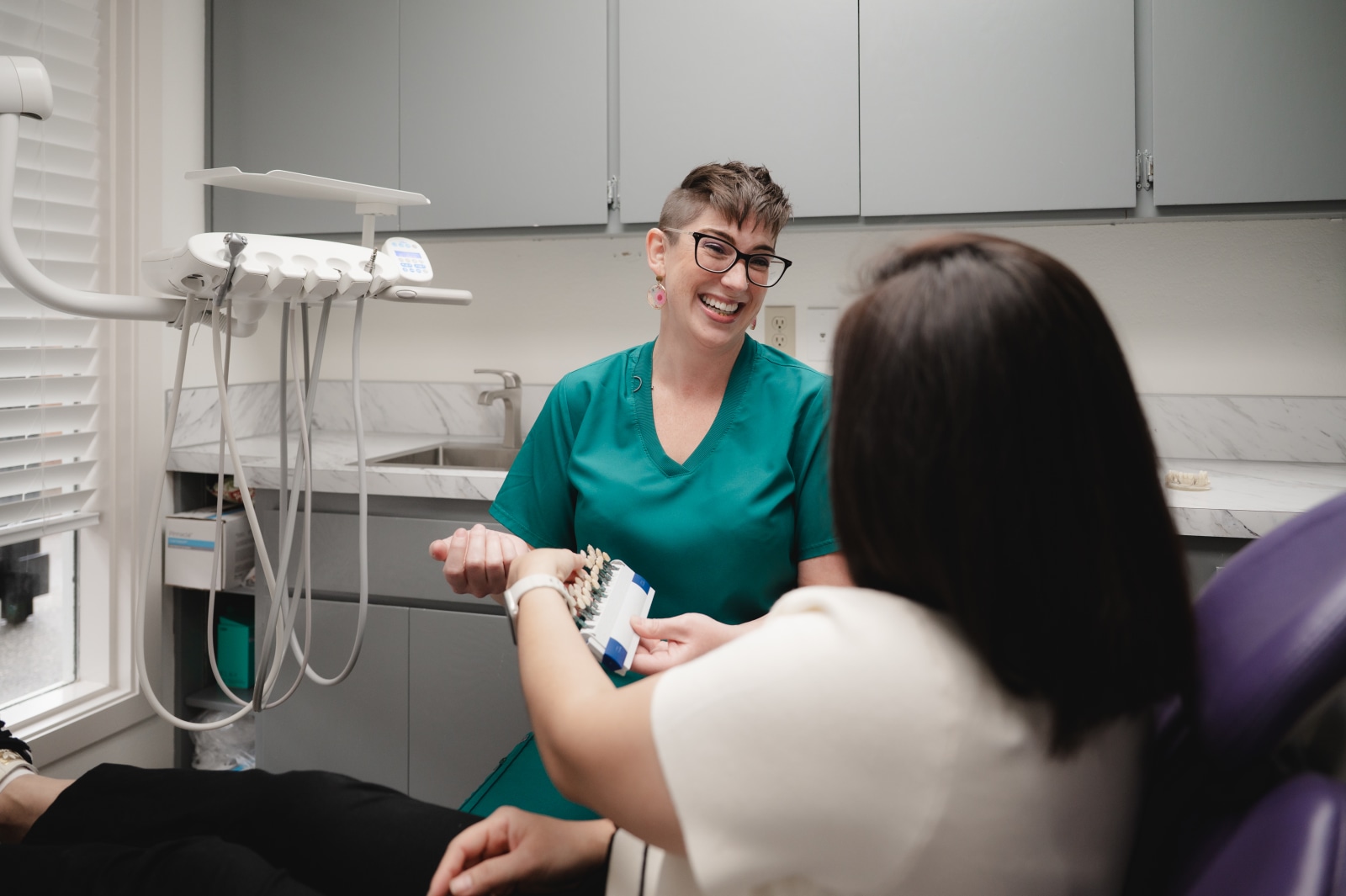
Your first visit is an opportunity to assess your oral health and learn how the practice communicates. It is also your chance to decide whether you feel comfortable with the dentist and the team's approach.
Depending on your needs and the practice's process, a new-patient appointment may include:
- A review of your medical and dental history, medications, and current concerns
- An examination of your teeth, gums, and other oral tissues
- X-rays when clinically appropriate, or a review of recent images if available
- A discussion of any findings and recommended next steps
- Time to ask questions about treatment, costs, and timing
A thorough appointment should be tailored to your situation. Not every patient needs the same set of X-rays or the same examination, and the dentist should explain what is appropriate for you.
Pay attention to how the conversation feels. Does the dentist listen before recommending treatment? Are findings explained in language you understand? Do you feel comfortable asking for clarification?
You should leave with a clearer understanding of your oral health and the next steps, even if you don't make every treatment decision that day.
How to Know When It's Time to Find a New Dentist
You don't necessarily need to change dentists because of one disappointing visit or a difference of opinion. However, recurring communication problems or a persistent lack of trust may mean the relationship isn't working.
Consider looking for another provider if:
- Your questions are regularly dismissed or left unanswered.
- You repeatedly receive recommendations without an understandable explanation.
- You feel pressured to accept treatment you don't understand.
- Your concerns about pain, anxiety, or recovery aren't taken seriously.
- The practice has ongoing communication or follow-up problems that affect your care.
- You no longer feel confident that you can make decisions collaboratively with your dentist.
If you're uncertain whether a concern is serious enough to warrant a change, a direct conversation may help. Explain what has been bothering you and see whether the practice responds constructively. If the relationship still doesn't feel right, seeking another provider is a reasonable option.
The important thing is to find a dentist with whom you can communicate openly and make informed decisions about your health.
How Division Street Dental Approaches Patient-First Care

Research can help you narrow your options, but the experience of working with a dentist is ultimately what matters. You deserve a practice where your concerns are heard, recommendations are explained, and treatment decisions are made with your oral health and goals in mind.
Division Street Dental's guiding principles offer more information about the practice's approach. You can also learn about Dr. Heron and review patient experiences as part of deciding whether the practice is a good fit.
If you're considering a new dentist, use your first conversation to ask questions about your concerns, the care you may need, and what to expect from an initial visit. You don't have to commit to every recommendation before you understand it, and you shouldn't feel that asking questions makes you a difficult patient.
To speak with the team, call (360) 424-9045. Whether you're looking for routine preventive care or want another perspective on a treatment plan, starting with a conversation can help you decide what comes next.
We’d love to meet you!
Schedule your personal dental experience. Call (360) 424-9045 or request an appointment online to set up your first visit. We’ll be in touch soon.
